According to industry experts, the highest mortality rates before reaching the hobbyist, are shipping related and are due to stress and starvation. But the mortalities begin with capture and many animals are dying in Hawaii while under the "expert" care of collectors and wholesalers, before they're ever shipped.
In January, 2010, over 600 fish collected for the trade were found dead, dumped in a Big Island boat harbor trash can. As outrageous as it was, it's just a drop in the bucket. An estimated 3% of all wildlife collected in Hawaii dies before being exported (min. estimate is 10 - 20 thousand annually).
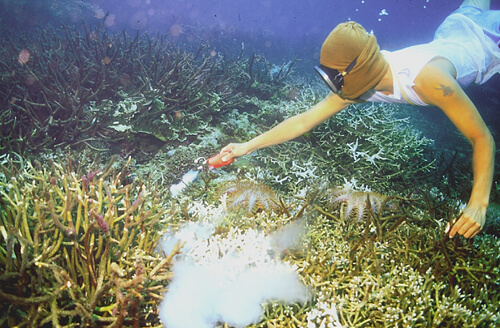
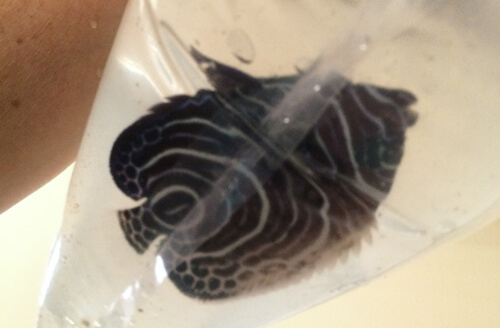
Injuries associated with capture include barotrauma from being surfaced too quickly; organ piercing while attempting to resolve barotrauma; unnecessary exposure to air (as pictured below); fin and spine trimming (as pictured at the bottom of the page); tissue tears; and, various other stressors.
Aquarium trade handling and starvation/shipping practices translate to, on average, an additional 9% of the wildlife shipped arriving dead or dying with 3 days at the receiving wholesaler or retailer's facility - each time they're shipped. That's 4% DOA and an additional 5% dead within 3 days. These are industry standards with repercussions (i.e. invoice deductions) only for DOA's above 5% (the receiver takes responsibility for deaths after arrival).

According to an industry member, fin and spine trimming is a a common practice, saving money on layers of shipping bags and heavy paper that would otherwise be used when shipping fish with sharp appendages.
Fortunately, fin and spine trimming, starvation for more than 24 hours and organ piercing were recently recognized by Maui County as cruel and inhumane, and are practices the trade is now prohibited from engaging in.
It is clear that for a multitude of reasons, reef wildlife in the aquarium hobby is unable to
survive for anywhere near their wild potential and suffers from essentially non-stop inhumane treatment before finally dying. This raises serious societal as well as environmental concerns - after all, for each animal that dies in a hobby tank, many more are taken from reefs to replace them.